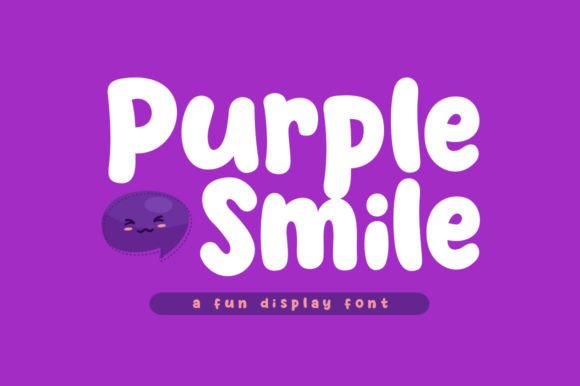
Purple Smile Display Font for Playful Digital Design
As a UI designer who ships landing pages, SaaS dashboards, and brand-forward web experiences, I reach for Purple Smile when the brief calls for warmth, wit, and instant visual delight. Purple Smile is a Display font — not built for paragraphs or data tables, but engineered for impact: bold headlines, animated CTAs, joyful section dividers, and branded micro-interactions that make users pause and smile. Its rounded terminals, bouncy baseline rhythm, and subtly exaggerated x-height give it high screen legibility at medium-to-large sizes — especially on mobile hero sections and app splash screens where first impressions drive engagement.
Purple Smile for Cartoon-Related Website Headers and Animated Landing Pages
When designing for edutainment platforms, kids’ learning apps, or animated explainer sites, Purple Smile delivers tonal clarity in under two seconds. Unlike generic “fun” fonts that sacrifice structure for whimsy, Purple Smile maintains clean letter spacing and consistent stroke contrast — critical for responsive Fonts that scale from 48px desktop headers down to 36px tablet banners without blurring or crowding. Use it for H1s above scroll-triggered animations, or as a dynamic type treatment inside SVG-based interactive illustrations. Pair Purple Smile with a neutral sans serif like Inter or Manrope for body text — this pairing creates strong visual hierarchy while preserving accessibility (AA contrast compliance on light/dark backgrounds) and fast load times via lightweight WOFF2 webfont delivery.
Purple Smile for Children’s Games and Educational App UI Elements
In children’s games and early-learning apps, typography isn’t just decorative — it’s part of the interaction model. Purple Smile works exceptionally well for tap-target labels (“Tap to Jump!”, “Match the Shapes!”), achievement badges, and playful loading states. Its open counters and generous letterforms improve recognition speed for emerging readers, and its friendly weight distribution prevents visual fatigue during extended play sessions. As a Display font, Purple Smile should never be used for instructions longer than five words — but for short, action-oriented UI copy? It boosts comprehension *and* emotional resonance. Test it over soft pastel gradients or subtle noise textures; avoid heavy drop shadows or tight tracking, which undermine its airy, approachable personality.
How Purple Smile Supports Conversion-Focused Layouts on Online Stores
E-commerce brands targeting creative parents, indie toy makers, or Montessori-aligned shops use Purple Smile to signal brand warmth without sacrificing polish. Try it on limited-time offer banners (“24-Hour Smile Sale!”), product name tags in boutique online stores, or illustrated category cards (“Storytime Corner”, “Build & Imagine”). Because Purple Smile is a premium Fonts asset, it conveys intentionality — telling visitors you’ve invested in cohesive, ownable design. For maximum conversion lift, apply Purple Smile only to primary CTAs and hero subheads, then anchor them with a highly legible system font (e.g., Roboto or IBM Plex Sans) for pricing, bullet points, and trust badges. This contrast builds credibility while keeping energy high.
Purple Smile for Brand Identity Systems and Digital Brand Kits
If your client or startup needs a distinctive yet scalable digital identity, Purple Smile serves as an expressive anchor — especially when paired with minimalist supporting Fonts. It’s ideal for logo lockups (as wordmarks or monogram accents), social media story templates, email header graphics, and branded Notion or Figma design systems. Because Purple Smile is a Display typeface, it thrives in controlled contexts: think favicon treatments, animated loader icons, or subtle hover effects on navigation items. Avoid stretching or distorting the glyphs — its charm lives in its natural proportions. Confirm licensing covers commercial use across domains, embedded web apps, and downloadable brand kits before deployment.
Purple Smile for Responsive Blog Headers and Creative Portfolio Titles
Bloggers, illustrators, and freelance designers use Purple Smile to differentiate their voice in crowded content spaces. On portfolio sites, it shines in project title cards (“Rainbow Rocket Lab”, “Tiny Town Builders”) and blog post headers that double as shareable social hooks. Its readability holds up well on dark mode layouts — just ensure minimum 24px size and sufficient line height (1.3–1.4) for vertical rhythm. For responsive behavior, declare Purple Smile in CSS with fallback stacks (font-family: 'Purple Smile', system-ui, sans-serif;) and serve variable-weight versions if available. If the Display font package includes stylistic alternates (like swash capitals or dotted periods), reserve those for hero graphics — not body text or form fields.
Purple Smile for Playful Touch Digital Experiences and Micro-Interactions
The real power of Purple Smile emerges in motion: button hover states, progress bar labels, celebratory toast messages (“Yay! Level Unlocked”), and even subtle cursor trails in creative web experiments. As a Fonts choice, it signals that your interface values joy as a usability metric — not just efficiency. But restraint is key: use Purple Smile for *one* expressive layer per screen. Overuse dilutes its impact and strains cognitive load. Always test on iOS and Android native browsers — some older WebView engines render display fonts with slight glyph jitter unless optimized with font-display: swap and preloaded critical CSS.
Purple Smile isn’t just another decorative Display font — it’s a strategic tone-setting tool for digital creators who understand that typography shapes perception before a single word is read. Whether you’re launching a children’s subscription app, refining a boutique brand’s web presence, or building a playful SaaS onboarding flow, Purple Smile delivers consistent, licensed, web-ready expressiveness — no custom kerning required. Download the full Fonts package today and start testing Purple Smile in your next Figma prototype or live staging environment.